


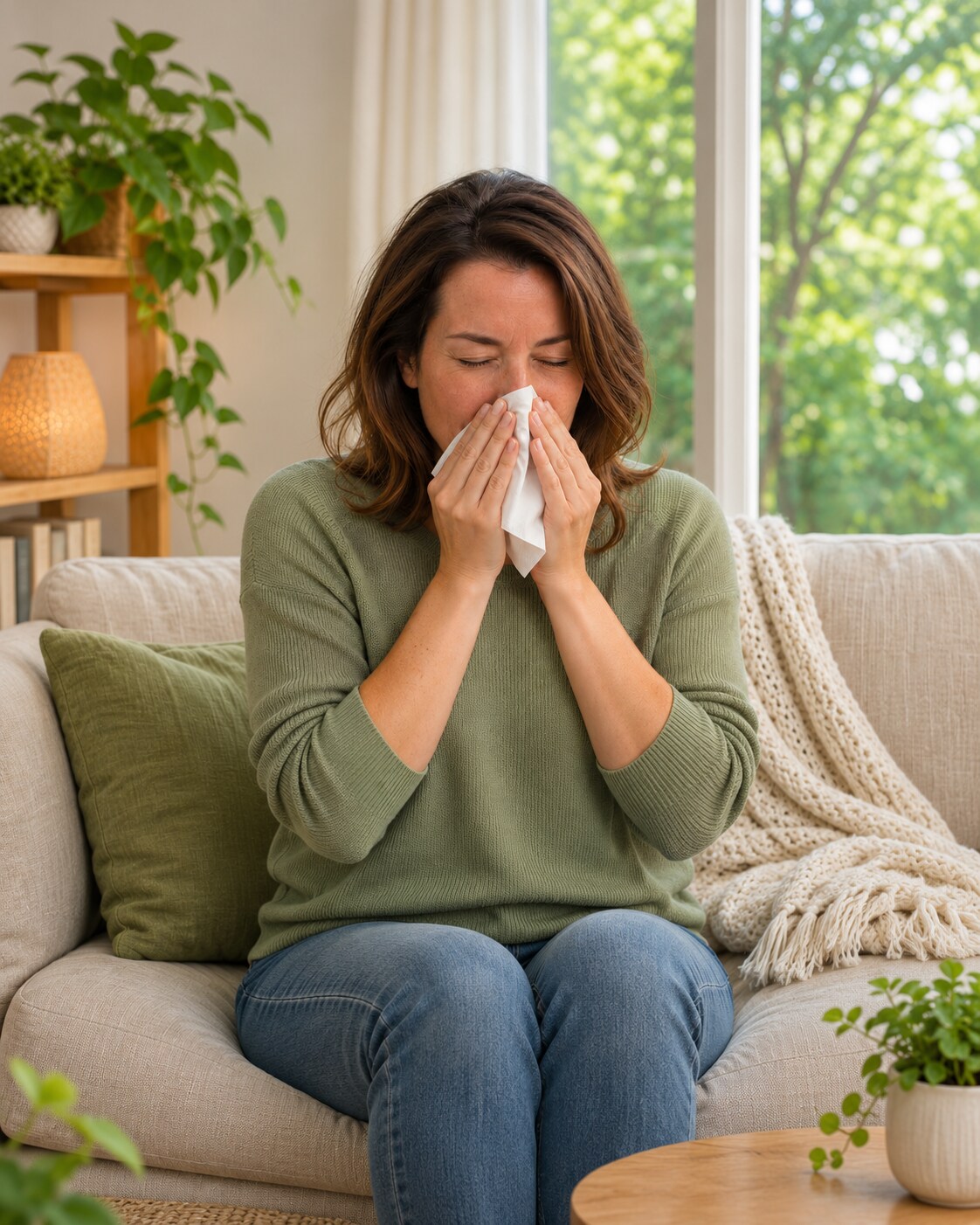
Frequent sneezing, a blocked nose and itchy eyes can interfere with everyday comfort. These symptoms may be linked to allergies, but similar problems can have other causes. Recognising symptoms is the first step towards an appropriate response.
Allergies do not only occur in spring
An allergy is the body’s reaction to substances that are usually harmless. These substances are called allergens. Plant pollen may cause seasonal symptoms, while dust mites, animal allergens and mould can cause problems throughout the year. Recurrent symptoms should therefore not be associated only with spring. [1, 3]
Which symptoms should you look out for?
Allergic rhinitis may cause:
- frequent sneezing;
- a runny or blocked nose;
- an itchy nose or roof of the mouth;
- itchy, red or watery eyes.
These symptoms can resemble a cold. Noticing that they recur in a particular environment can help identify the cause, but this alone is not enough to establish a diagnosis. [3]
Is itchy skin always caused by an allergy?
No. Itchy, raised patches may be hives. Alongside allergies, infections, heat, cold and other factors can trigger hives. The cause of skin symptoms needs to be assessed separately. [4]
What can you do in everyday life?
- Keep track: note when and where symptoms occur, and share your observations with a doctor.
- If you are sensitive to pollen: limit time outdoors when pollen levels are high.
- At home: dust with a damp cloth, wash bedding regularly and address damp conditions that encourage mould.
- Check your treatment: ask a doctor or pharmacist about a suitable option and use it according to its instructions.
Antihistamines and certain nasal sprays may be used for allergic rhinitis, but the appropriate choice differs from person to person. [1, 3]
When should you see a doctor?
Seek medical advice if symptoms recur, disturb your sleep or daily activities, have an unclear cause or do not improve with the treatments you are using. A doctor can assess your symptoms and arrange allergy testing if needed. [3]
This article provides general health information and does not replace individual medical advice.
Sources
- Ministry of Health of Azerbaijan — Reducing allergens at home
- State Agency for Medical Insurance and Expertise — When to call an ambulance (103)
- NHS — Allergic rhinitis
- NHS — Hives and signs of a severe allergic reaction