


The monitor is only part of a blood pressure check: preparation and posture matter too. A few simple steps can make your readings more useful when you discuss them with your clinician.
HEART AND CIRCULATORY HEALTH
A quiet moment before you measure
Prepare properly, sit comfortably and keep consistent records.
Feeling well does not rule out high blood pressure
High blood pressure often causes no symptoms. Headaches or how well you feel are therefore not reliable guides. Measurements show your readings, while regular records help you have a more informed discussion with your clinician. [6]
What do the two numbers mean?
The first, upper number is systolic pressure: the pressure when the heart pumps blood into the arteries. The second, lower number is diastolic pressure, recorded as the heart relaxes between beats. Write down both numbers. Discuss your personal target with your clinician and do not diagnose yourself from a single home reading. [5] [1]
Choose a suitable monitor and cuff
Choose a clinically validated automatic upper-arm monitor. Its cuff must fit your arm circumference. Ask a healthcare professional to check the fit and show you how to use it. [1]
Before you measure
Avoid smoking, caffeine and exercise for at least 30 minutes beforehand. Empty your bladder, then sit quietly for at least 5 minutes without talking. [2]
Check your position
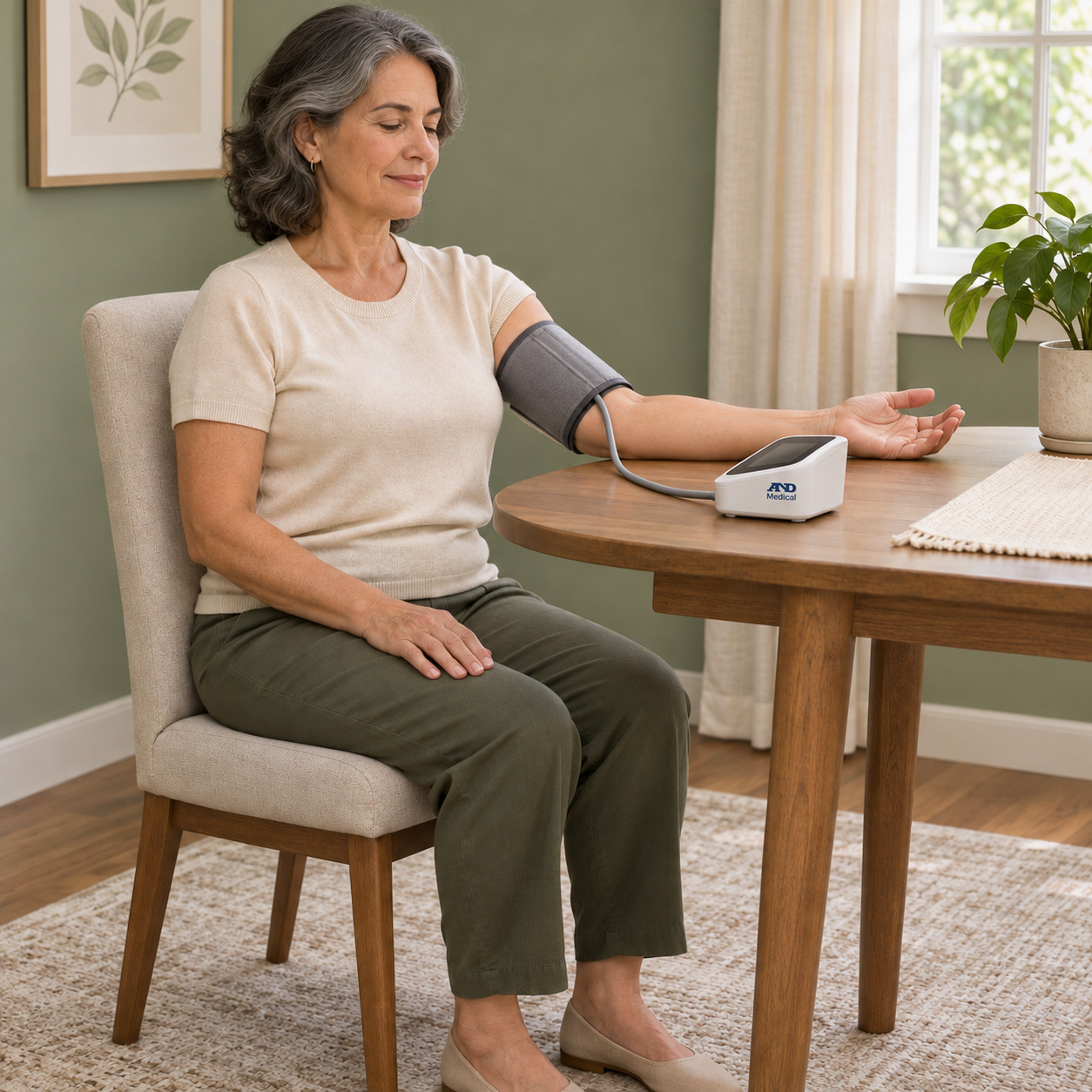
- Support your back and keep both feet flat on the floor.
- Keep your legs uncrossed.
- Rest your arm on a support, with the cuff at heart level.
- Put the cuff on your bare upper arm, not over clothing.
- Do not talk during the measurement. [3]
Record the readings
Take two readings 1 minute apart each time and record both. Agree how often to measure with your clinician. Home monitoring does not replace medical care; do not stop medication on your own because of a reading. [5] [1]
How to keep a measurement diary
A phone note or small notebook is enough. Use separate rows for the date, time, first reading and second reading. Leave space for a brief note about anything you want to discuss with your clinician. This layout makes it easier to present your results at your next appointment.
Agree how many days and at what times to measure with your clinician. Follow the schedule provided and keep both readings. If you are unsure what the numbers mean, take your diary and monitor to the appointment. [5] [1]
Check common mistakes beforehand
Rushing, talking, crossing your legs or leaving your arm unsupported can affect a reading. Check your position again after fitting the cuff. Avoid phone conversations or other tasks while measuring; spend these few minutes quietly. [3]
This article provides general health information and does not replace individual medical advice. Discuss personal questions about medicines and devices with your doctor or pharmacist.
Sources
- American Heart Association — Home Blood Pressure Monitoring
- NHLBI / NIH — High Blood Pressure — Diagnosis
- CDC — Measuring Your Blood Pressure
- American Heart Association — What are the Signs and Symptoms of High Blood Pressure?
- NHS — Blood pressure test
- NHS — High blood pressure