


Where you keep medicines is part of everyday care. Suitable conditions and safe placement help protect both your medicines and the people at home.
HEALTH AT HOME
A thoughtful place for your home medicines
Read the storage instructions. Keep the packaging. Prevent access by children.
Start with the label
Follow the storage conditions on the label and in the leaflet. Some medicines need refrigeration; others need a cool, dry place. Do not automatically refrigerate every medicine. Ask your pharmacist if the instructions are unclear. [2]
Avoid the bathroom and the car
Heat, moisture and light can affect medicines. Avoid bathroom cabinets and places close to a cooker or water. Do not store medicines in a car. Keep their original packaging. [1]
Check expiry dates
An expiry date assumes the stated storage conditions are followed. Poor storage can affect quality even before that date. Do not take expired medicine; if storage conditions are uncertain, check with a pharmacist before using it. [3]
The usable period may change after opening
The printed expiry date is not always the same as the usable period after opening. Some medicines must be used within a shorter period once opened. Where the leaflet specifies this, note the opening date and follow the stated limit. Do not assume all drops, syrups and creams have the same limit. [6]
Do not rely on the date if the appearance changes
Do not take tablets that have changed colour, smell or texture, stuck together or cracked. Even before expiry, these changes mean storage conditions need checking. Show the packaging to your pharmacist and clarify what to do next. [1]
Out of children’s sight and reach
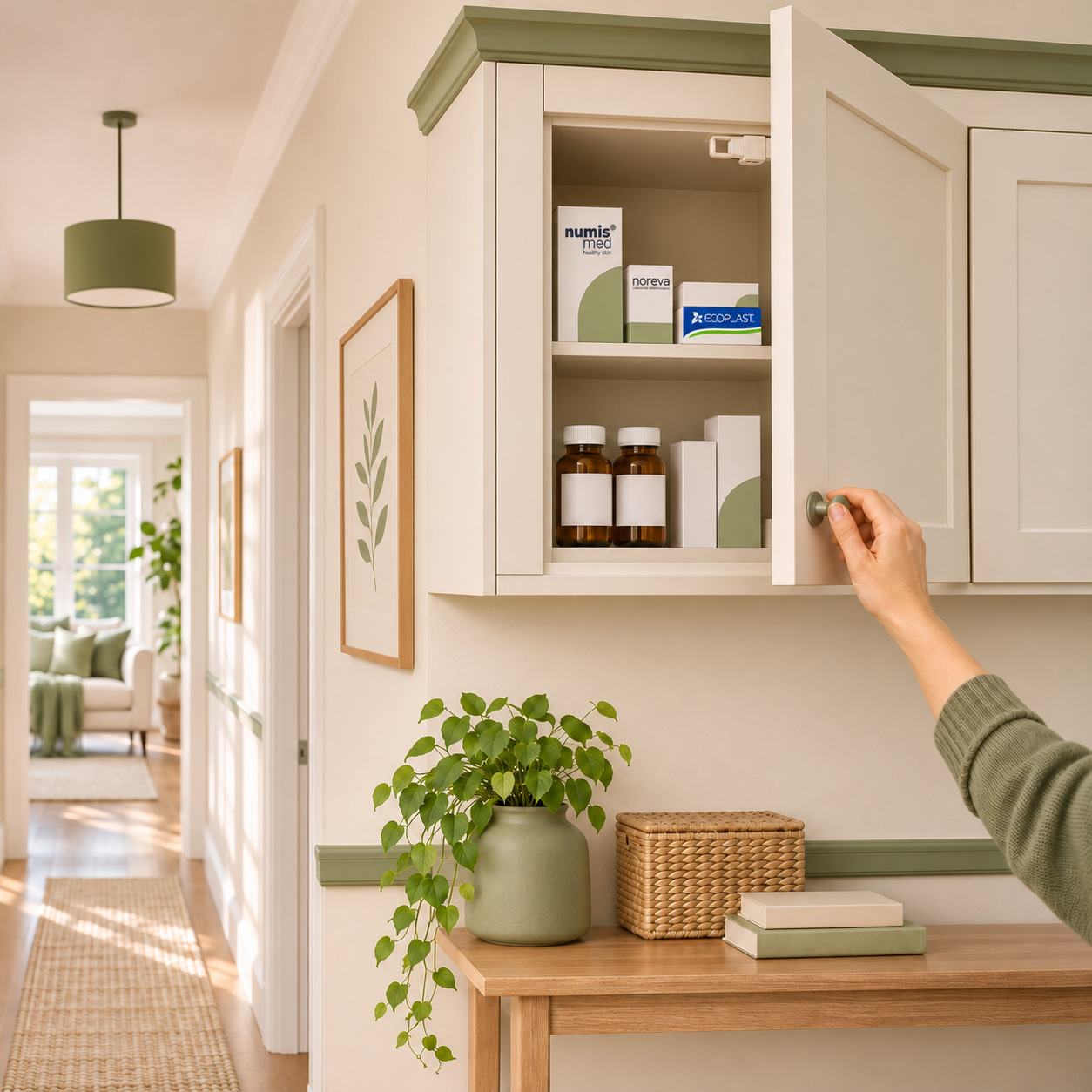
Keep medicines in a locked cabinet and put them away after every use. Do not rely on a child-resistant cap alone. Visitors’ medicines in bags and pockets must be out of reach too. If a child may have swallowed medicine accidentally, seek emergency medical help immediately. [4]
Separate medicines you no longer need
Keep unused and expired medicines separately in a secure place while you ask a local pharmacist about appropriate disposal. Do not assume a pharmacy accepts returned medicines. [5]
Keep family members’ medicines separate
Do not share a medicine prescribed for one family member with another. Similar symptoms do not mean the same treatment is suitable. [7] If several people’s medicines are kept at home, clearly separating their packages, keeping labels visible and leaving the leaflet with the box is a practical organisational approach.
A simple order for checking your medicine cupboard
First assess the storage location, then check the label, dates and condition of each package. Write down questions about medicines currently in use and safely separate those no longer needed. Finish without leaving open packages near children. The aim is to know how your existing medicines are stored and whom they belong to, rather than to build a large stock.
This article provides general health information and does not replace individual medical advice. Discuss personal questions about medicines and devices with your doctor or pharmacist.
Sources
- MedlinePlus — Storing your medicines
- FDA — 5 Medication Safety Tips for Older Adults
- FDA — Expiration Dates — Questions and Answers
- MedlinePlus — Medicine safety and children
- FDA — Where and How to Dispose of Unused Medicines
- Care Quality Commission — Disposing of medicines — expiry after opening
- Guy’s and St Thomas’ NHS Foundation Trust — Medicines and how to manage them