


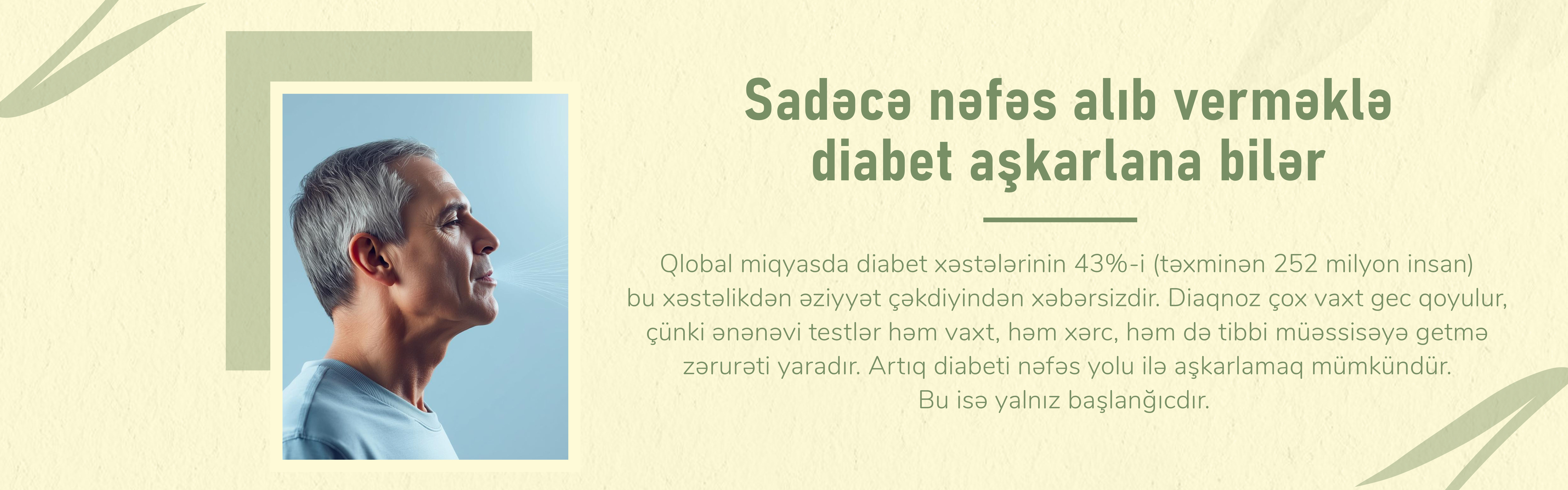
Qlobal miqyasda diabet xəstələrinin 43%-i (təxminən 252 milyon insan) bu xəstəlikdən əziyyət çəkdiyindən xəbərsizdir. Diaqnoz çox vaxt gec qoyulur, çünki ənənəvi testlər həm vaxt, həm xərc, həm də tibbi müəssisəyə getmə zərurəti yaradır.
Artıq
diabeti nəfəs yolu ilə aşkarlamaq mümkündür. Bu isə yalnız başlanğıcdır.
Yeni nəfəs sensoru: laboratoriyasız diaqnoz
Penn Dövlət
Universitetində mühəndislik üzrə dosent Huanyu ‘Larry’ Cheng-in rəhbərlik
etdiyi tədqiqat qrupu nəfəs nümunəsi əsasında bir neçə dəqiqəyə diabet və
prediabeti müəyyən edən sensor hazırlayıb. Tədqiqatın nəticələri “Chemical
Engineering” jurnalında dərc olunub.
İstifadə
qaydası sadədir: nəfəs nümunəsi xüsusi torbada toplanır, sonra bu torba
sensorla təmas etdirilir və nəticə qısa zamanda əldə olunur. Heç bir qan
analizi və laborator müayinə tələb olunmur.
Aseton nədir və nəfəsdə niyə mövcuddur?
Ənənəvi
diabet testləri qlükoza səviyyəsini ölçür, yeni texnologiya isə fərqli yanaşma
tətbiq edir: nəfəsdəki asetonu təhlil edir.
Aseton yağ
parçalanması zamanı yaranan təbii maddədir. Sağlam insanların nəfəsində də az
miqdarda mövcuddur. Amma nəfəsdəki asetonun miqdarı 1,8 milyon hissədə bir hissədən
yuxarı qalxarsa, bu, diabet riskinin olduğunu göstərir.
Bu balaca cihaz necə bu qədər ağıllıdır?
Sensorun effektivliyi onun hazırlanmasında
istifadə olunan materiallardan qaynaqlanır. Tədqiqatçılar bu cihazı yaratmaq
üçün lazerlə induksiya olunmuş qrafen adlı materialdan istifadə ediblər. Bu,
poliamid film üzərində lazerlə yaradılmış, məsaməli və qaz molekullarını
saxlaya bilən xüsusi qrafen qatıdır.
Lakin qrafen təkbaşına asetonu digər
qazlardan ayırmaq üçün kifayət qədər selektiv deyil. Ona görə də bu materialın
üzərinə sink oksid əlavə olunub. Bu birləşmə sensorun yalnız asetona həssas
olmasını və digər maddələrə reaksiya verməməsini təmin edir.
Sensorun qarşılaşdığı başqa bir problem isə
nəfəsdəki yüksək nəmlik olub. Su molekulları asetonu sıxışdıraraq nəticələri təhrif
edə bilərdi. Bu səbəbdən tədqiqatçılar cihazın üzərinə selektiv membran — yəni
suyu keçirməyən, amma asetona yol verən xüsusi qat — əlavə ediblər.
Bu texnologiya gələcəkdə nəyə çevrilə bilər?
Hazırda bu cihaz nəfəs nümunəsinin xüsusi
torbada toplanmasını tələb edir. Amma növbəti mərhələdə sensorun birbaşa burun
altına yerləşdirilməsi və ya maska daxilində quraşdırılması planlaşdırılır.
Ən maraqlısı isə odur ki, bu texnologiya
yalnız diabetin erkən aşkarlanması üçün deyil, həm də fərdi sağlamlıq
monitorinqi üçün istifadə oluna bilər. Çünki aseton səviyyəsi insanın
qidalanmasından, fiziki aktivliyindən və ümumi həyat rejimindən təsirlənir. Bu da o deməkdir ki, gələcəkdə bu sensor sizə:
- Pəhrizinizin
nə dərəcədə uyğun olduğunu,
- İdman
proqramınızın orqanizminizə necə təsir etdiyini,
- Hətta aclıq halının və karbohidrat qəbulunun orqanizmə təsirini nəfəsdən analiz edərək göstərə biləcək.
“Əgər aseton səviyyəsinin
pəhriz və fiziki aktivliklə necə dəyişdiyini anlaya bilsək, bu texnologiya təkcə
diaqnostika yox, gündəlik sağlamlıq nəzarəti üçün də böyük imkanlar yaradacaq,” – deyə Larry Cheng vurğulayır.
Diaqnoz üçün iynəyə ehtiyac olmayan bir gələcək mümkündürmü?
Bu texnologiyanın
imkanları ilə:
- İnsanlar ağrısız və
narahatlıq olmadan sağlamlıqlarını izləyə biləcək,
- Diabet riski öncədən
aşkarlana biləcək.
- Diabetin
ağırlaşmaları azaldılacaq,
- Sağlamlıq nəzarəti daha əlçatan və fərdiləşdirilmiş hala gələcək.
Layihə ABŞ Milli Səhiyyə İnstitutları (NIH) və ABŞ Milli Elm Fondu (NSF) tərəfindən maliyyələşdirilib. Komanda artıq bu texnologiyanın kommersiya versiyasını hazırlayır. Diabetin qarşısını almaq – bir nəfəs qədər yaxın ola bilər.
Mənbə: New breath sensor detects diabetes quickly and easily - sciencedaily.com